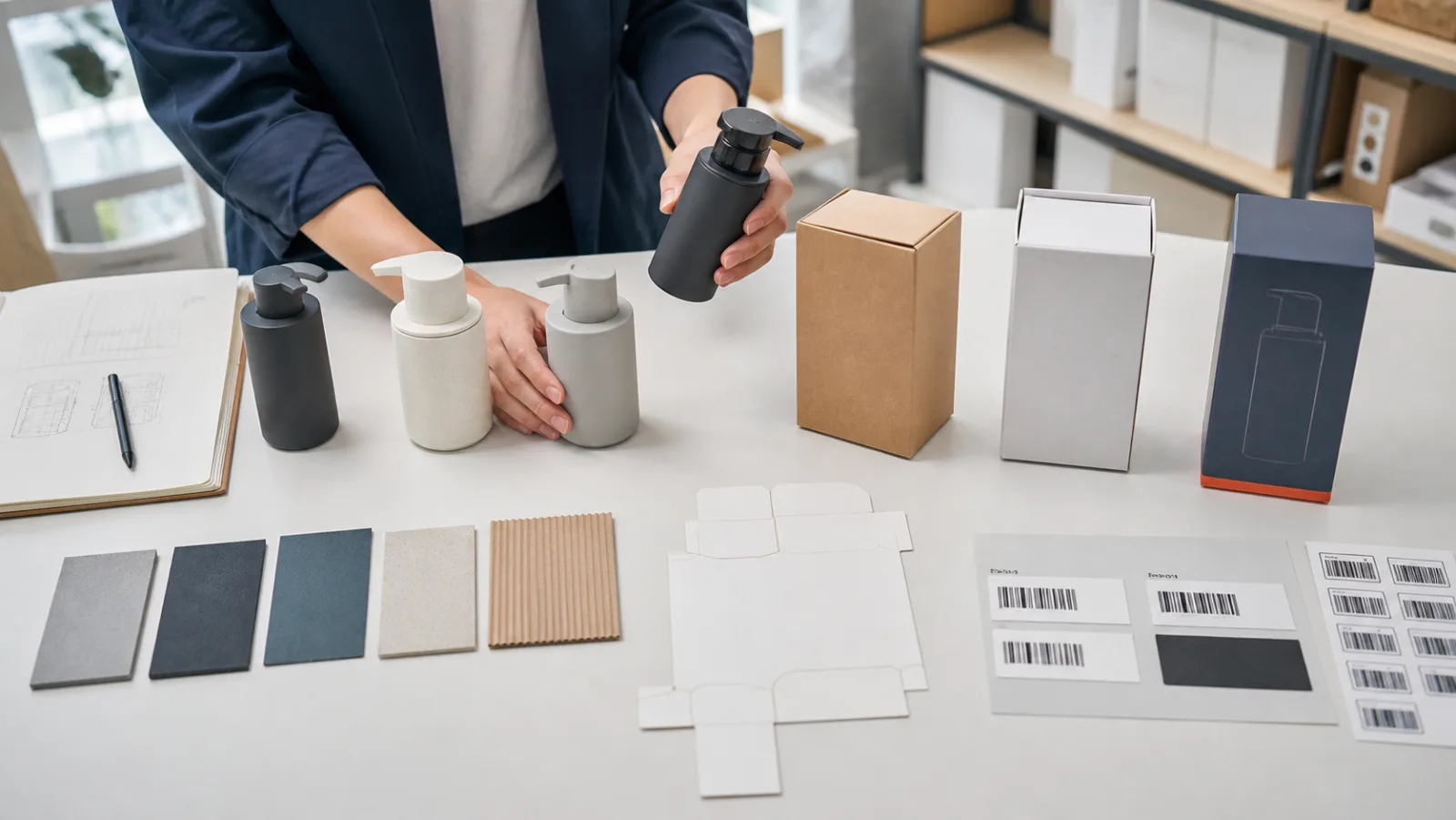
A supplier quoting an MOQ of 500 units may still be able to produce 100. The real question is which cost or operational constraint makes 500 economical. Good MOQ negotiation identifies that constraint and changes the order structure without pretending it does not exist.
Quick answer: Ask the supplier to break the MOQ into product, material, color, packaging, and component requirements. Then reduce customization, use stock inputs, pay setup costs separately, or accept a higher first-order unit price. Do not place the bulk order until you have approved a representative production sample.
What creates an MOQ
| MOQ driver | Example |
|---|---|
| Raw material | Fabric mill, resin color, metal sheet, or printed film has its own minimum |
| Machine setup | Mold installation, color calibration, printing plates, or line cleaning takes time |
| Components | A pump, battery, chip, zipper, or insert is purchased from another supplier |
| Packaging | Custom printed boxes may have a higher minimum than the product |
| Labor efficiency | Small runs spend more time on setup than production |
| Commercial priority | The factory may reserve capacity for larger customers |
Ask, “Which part of this order sets the MOQ?” That question is more useful than asking only for the lowest possible number.
Practical ways to lower the first order
Use stock materials and colors
Choose a material, component, or color already used by the factory. Custom color matching can trigger a separate material minimum and extra testing.
Separate product MOQ from packaging MOQ
Start with a standard box plus a printed sleeve, label, insert, or sticker. You can upgrade to fully printed packaging after demand is proven.
Pay setup or tooling separately
If the constraint is a fixed setup cost, paying it explicitly can make a smaller batch workable. Confirm who owns the tooling and how it will be stored.
Accept a higher pilot-run price
A smaller first order often costs more per unit. Compare the premium with the cost of holding hundreds of unproven units. A pilot run is risk reduction, not necessarily the cheapest manufacturing run.
Limit variants
One color and one size are easier than five colors across four sizes. Add variants after the process and demand are validated.
Combine compatible orders
Some factories can schedule your order alongside a run using the same material or process. This may reduce material minimums but can extend lead time.
The sample sequence buyers should expect
- Reference sample: An existing unit showing general capability.
- Development sample: A first version using your specification.
- Revised sample: Corrections after documented feedback.
- Pre-production sample: Made with intended materials, components, finish, labels, and packaging.
- Golden sample: The approved physical and documented production reference.
Not every simple product needs five physical rounds. The functions still matter: capability, development, correction, and final approval should not be confused.
What to put in the sample request
- Drawings, dimensions, and tolerances
- Material names and grades
- Color references
- Surface finish and workmanship requirements
- Function and test method
- Branding and artwork files
- Product, packaging, and shipping labels
- Unit packaging and master-carton requirements
- Target market and compliance requirements
- Required delivery date and shipping method
Ask the supplier to list every difference between the sample and planned production. For example, a 3D-printed prototype may not represent injection-molded surface finish or production material performance.
Do not let a “free sample” control the decision
Free catalogue samples can be useful, but custom development consumes material and engineering time. Paying a reasonable sample and courier cost can create a clearer commercial relationship and gives you more room to demand the correct version.
Never accept a policy that requires full bulk payment before you can see a customized unit. If tooling is required, define tooling payment and sample approval separately from mass-production authorization.
A better pilot-order proposal
Instead of asking, “Can you do 100 pieces?” send a structured option:
We propose 100 units in one stock color, standard packaging with our label, and a higher pilot price. We will pay the agreed setup cost. After the pilot passes inspection and sales validation, the next order target is 500 units with custom packaging.
This shows the supplier a path to repeat volume while keeping the first commitment controlled.
SourceProChina can identify the real MOQ driver, collect samples from multiple suppliers, consolidate shipment, and document revisions. Send us the product and target pilot quantity to evaluate a workable first order.