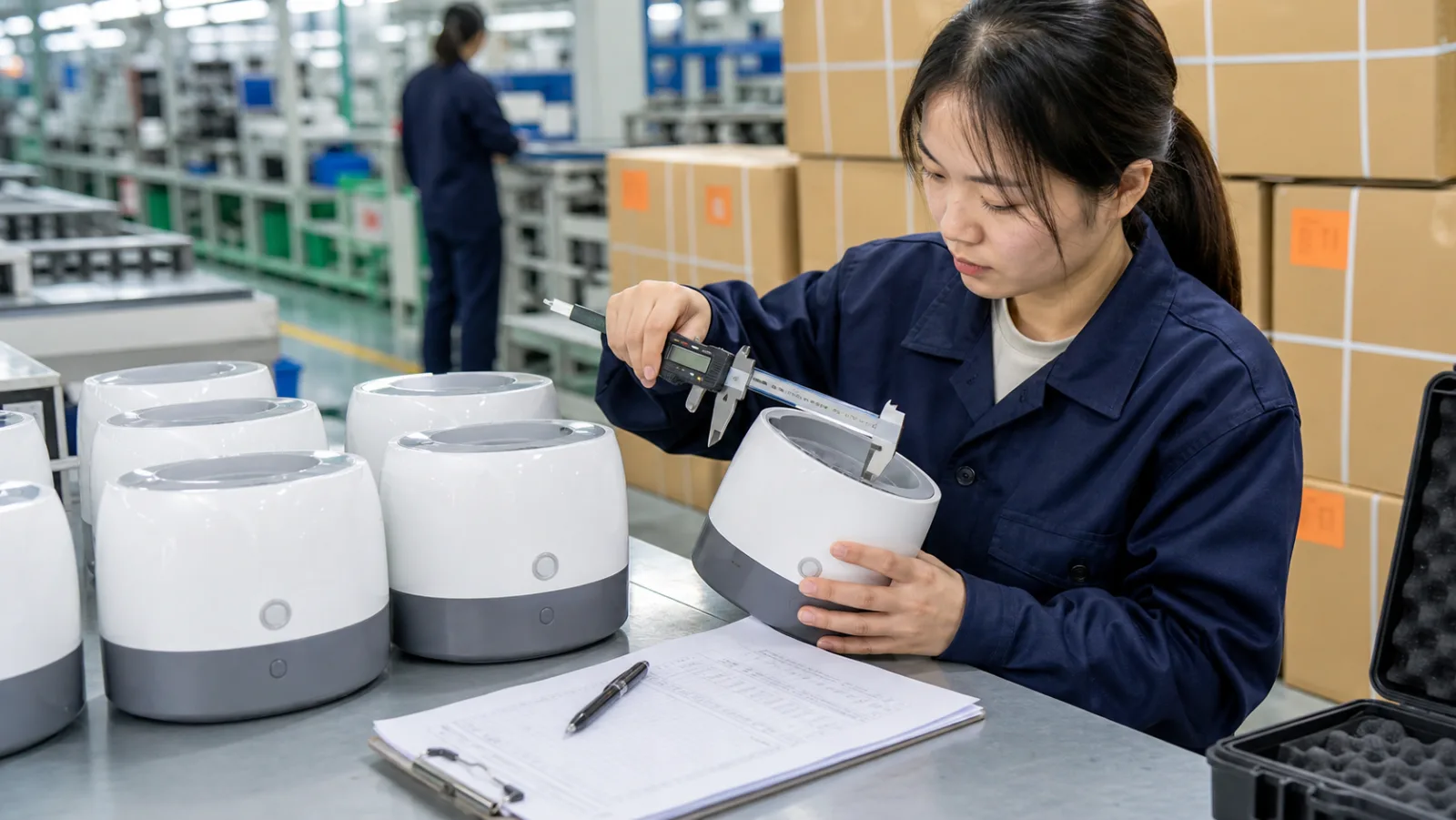
One of the most frustrating sourcing failures is a strong sample followed by inconsistent mass production. Buyers sometimes describe this as a supplier suddenly becoming dishonest. That can happen, but many failures begin with a weaker process: the sample was approved visually, while the production standard remained undefined.
Quick answer: Quality drops when the sample does not lock materials and tolerances, the production route changes, subcontractors are added, cost reductions are made without approval, or the factory lacks repeatable process control. Prevent it by turning the approved sample into a documented standard and checking production before the whole lot is complete.
A sample and a specification do different jobs
The sample shows what one unit looked and felt like. The specification explains how every acceptable unit should be made and tested.
For example, “thick cotton fabric” is subjective. A useful specification identifies fiber composition, fabric weight, construction, color reference, shrinkage limit, dimensions, sewing requirements, and the method used to evaluate them.
Use the approved unit as a golden sample, but attach it to controlled documents. Record its date, version, product code, and signed approval status. Keep sealed references with both buyer and factory when practical.
Why production drifts
Unapproved material substitution
A factory may use an alternate resin, fabric, coating, adhesive, component, or packaging material to solve a shortage or protect margin. The substitute may look similar during a quick check but behave differently in use.
The sample was made outside the normal process
Senior technicians may hand-finish a sales sample. Mass production uses regular operators, faster cycles, different tools, and line-level inspection. If the sample cannot be reproduced by the planned process, it is not a production-ready reference.
Tolerances were never agreed
No manufactured item is perfectly identical. Without tolerances, the factory and buyer can both believe they followed the sample while disagreeing about acceptable variation.
Work is subcontracted
Printing, plating, molding, electronics assembly, sewing, packaging, or even final production may move to another facility. Uncontrolled subcontracting changes materials, equipment, operators, and quality systems.
Commercial changes bypass technical approval
A salesperson agrees to a lower price or shorter lead time, but the operational effect is not discussed. Cost and schedule changes often require a different material, process, batch size, or inspection plan.
Build a change-control rule
Put a simple requirement in the purchase terms:
No material, component, process, subcontractor, tooling, packaging, label, or production-site change may be made without written buyer approval.
Ask the supplier to describe the reason, affected specification, proposed alternative, test evidence, cost impact, and timing. Approve a new sample when the change can affect form, fit, function, appearance, compliance, or durability.
Control production at three points
- Before production: confirm approved materials, components, documents, packaging files, and golden sample.
- During production: inspect first finished units and critical processes while corrections remain manageable.
- Before shipment: sample the completed lot against specifications and the golden sample before balance payment.
For repeat orders, compare quality data over time. Track defect types, measurements, test results, material lot information, and corrective actions. This makes gradual deterioration visible before customer returns reveal it.
Questions to ask after a mismatch
- Is the production material identical to the approved sample material?
- Were the same factory, line, tooling, and subcontractors used?
- Which specification or tolerance covers the difference?
- When was the first nonconforming unit produced?
- How much of the lot is affected?
- Can affected units be reliably sorted or reworked?
- What prevents the same cause on the next order?
Avoid accepting “the next order will be better” as the only corrective action. A useful response changes a material control, work instruction, process parameter, inspection point, or approval step.
SourceProChina can convert samples and scattered messages into a production checklist, monitor first production, and inspect the finished order. Tell us where the sample and production differ to identify the missing control.